
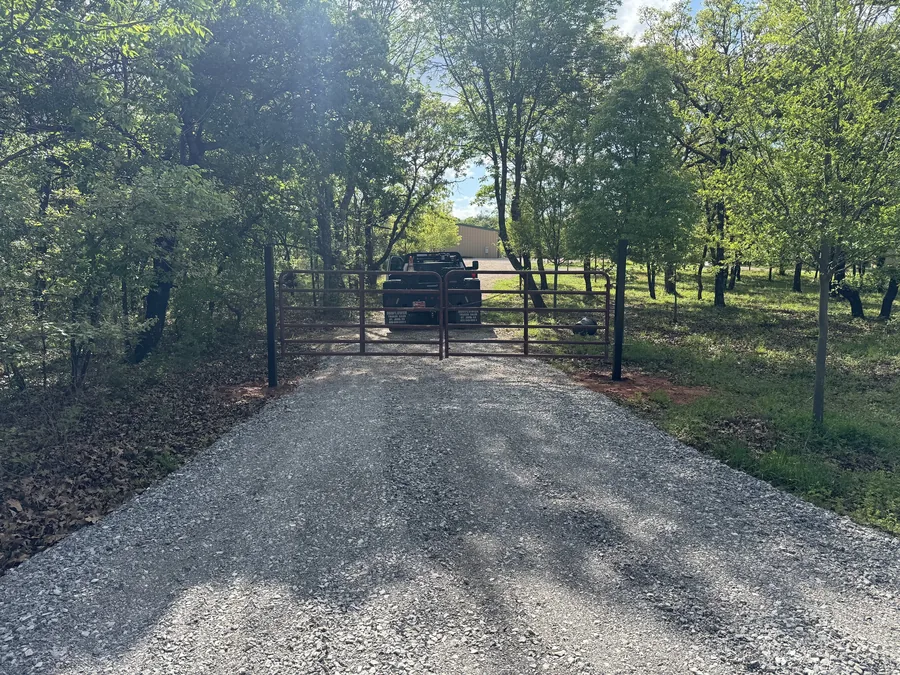
Gravel Driveways
We build gravel driveways onto raw land and home sites, from the base up to the top rock. We also level and regrade worn gravel driveways.
Learn More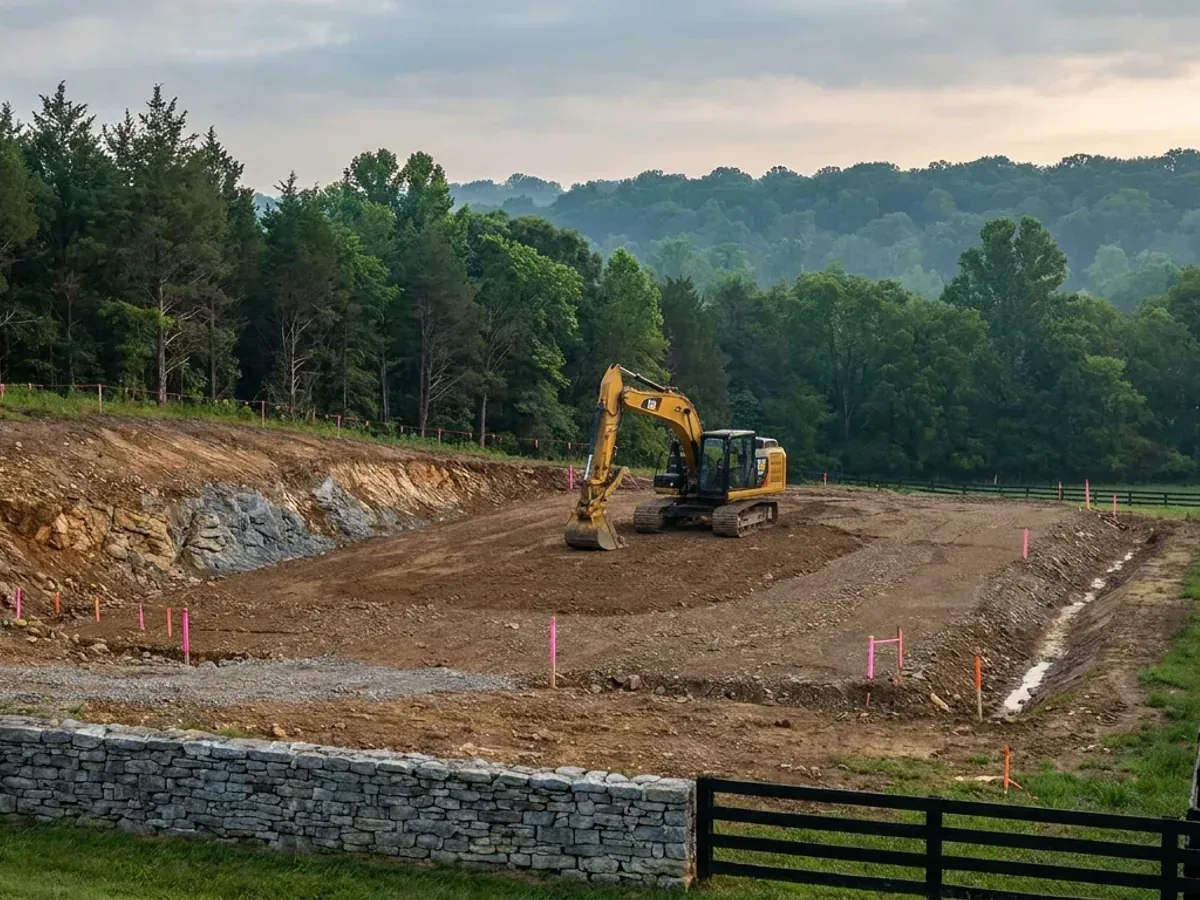
Site preparation turns raw land into ground a builder can use. We clear the site and strip off the top layer. Then we rough grade the ground and build the pad for a new house or a shop. Site prep picks up where our land clearing around Waxahachie leaves off.
Clearing comes first, and it works the same way as our lot clearing. A compact track loader with a forestry mulching head turns brush and small trees into mulch where they stand. On the pad area, that mulch comes off with the roots. Past the pad, it can stay on the ground as cover.
Tell us about the land, what you want done and where it is. We look at the land and put the quote in writing.
Each job starts with the builder's plan and a look at the land. The builder or a surveyor marks where the building will sit. We check how thick the brush is and where water runs after a rain. Texas law requires a call to 811 at least two business days before anyone digs.
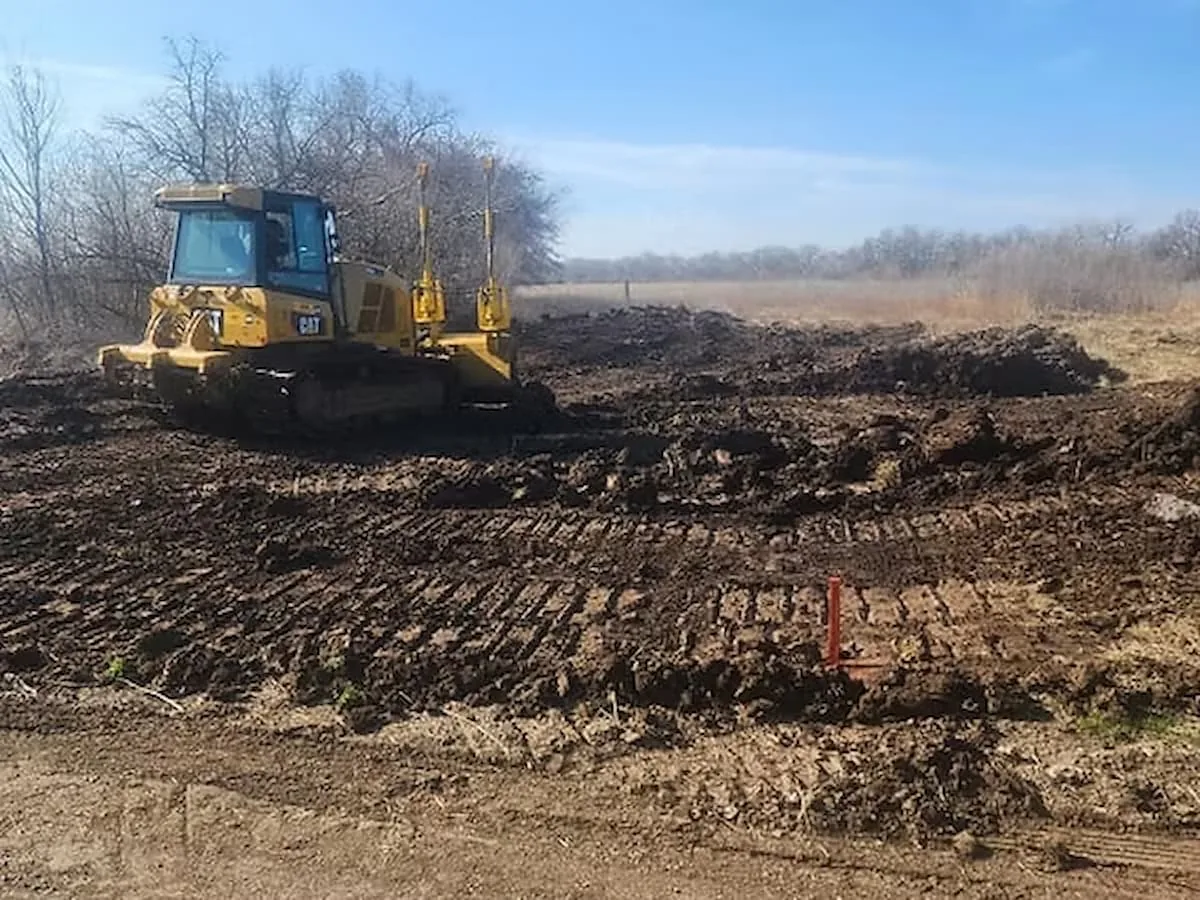
Next, the top layer of soil comes off. That layer is full of grass and roots, and a pad needs firm ground under it. The stripped soil can stay in a pile on the property, or haul off can be arranged.
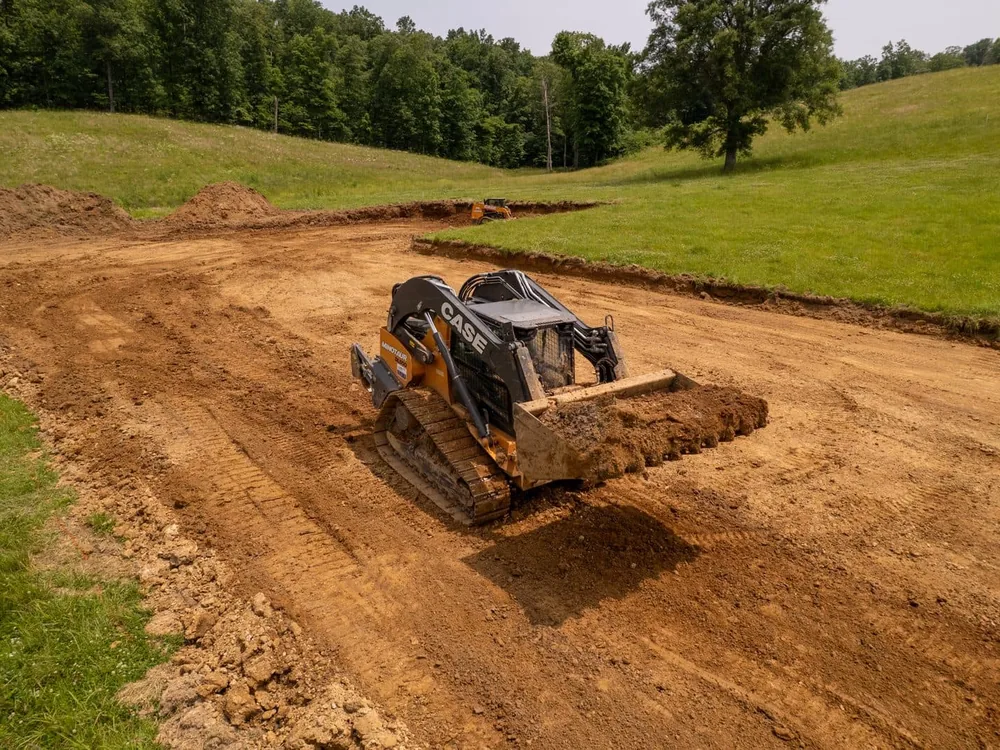
Rough grading comes after that, with the high spots cut and the low spots filled. Then the pad goes up in layers, and each layer is packed down before the next one. The builder's plan sets the size and the height of the pad.
Two clays cover about a third of Ellis County, by the federal soil survey's numbers. One is Houston Black, the clay locals call black gumbo, and the other is Heiden. Both swell when they get wet and shrink as they dry. Clay like this is called expansive soil.
The soil survey has a Texas rating for houses on a concrete slab, and it rates both clays very limited. The reason it gives is high shrink-swell. A Texas state bulletin on foundations spells out what that means. Wet clay swells and can lift a building, and dry clay shrinks and lets it settle.
The residential building code calls for foundations on expansive soil to be designed for it. That design belongs to the builder and the engineer, and we build the pad to their plan. The same state bulletin wants water to drain away from the house on all sides. So we shape the ground around the pad to shed rain off and away.
Site prep is the first round of site work on a new build. It ends with the pad built and a way in for the builder's trucks. From there, the foundation contractor forms and pours the slab. The builder runs the job and sets the order of the trades.
The septic installer and the well driller follow the pad where the land needs them. Near the end of the build, land grading around the house sets the final slope of the yard.
State stormwater rules matter on a bigger build. The Texas Commission on Environmental Quality's construction stormwater permit can apply to sites that disturb an acre or more. It calls for a stormwater plan before construction starts. Ask your builder how the job meets it.
Call or text for a written quote. We work about 200 miles around Waxahachie across Ellis County and the counties around Dallas and Fort Worth.
(469) 309-7002From the first call or text to the finished work, here is how it goes.
Call or text (469) 309-7002, or send the form. Tell us where the land is and how thick the brush has grown.
We come out to see the brush and the way in for the machine. You tell us what the land is for, and we plan the work around it.
The quote lists the work and the price in writing. Work starts once you approve it.
We set a start date with you and bring in the mulcher. Brush and small trees turn to mulch where they stand.
When the plan calls for dirt work, the pad and the drive go in next. The job ends with open ground ready to use.
Common questions about site preparation around Waxahachie and the counties south of Dallas and Fort Worth. If yours is not here, call or text and ask.
We build gravel driveways onto raw land and home sites, from the base up to the top rock. We also level and regrade worn gravel driveways.
Learn More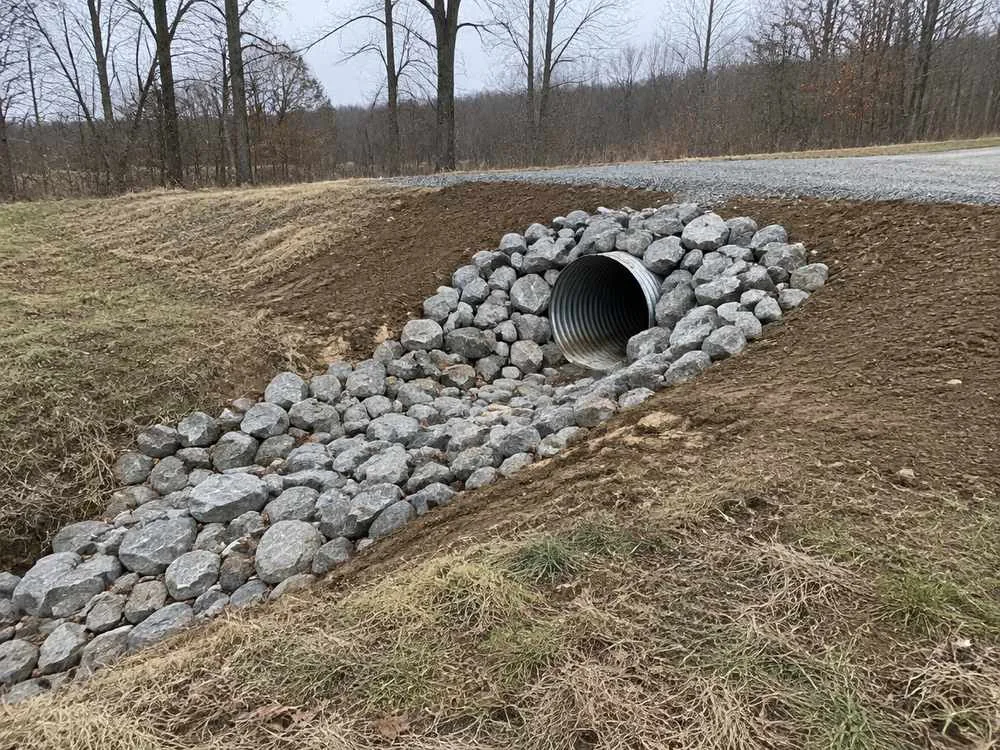
Driveway culverts at the road ditch and culvert crossings where a ranch road meets a draw. Each pipe goes in at the low line where water runs, on a firm, even bed.
Learn More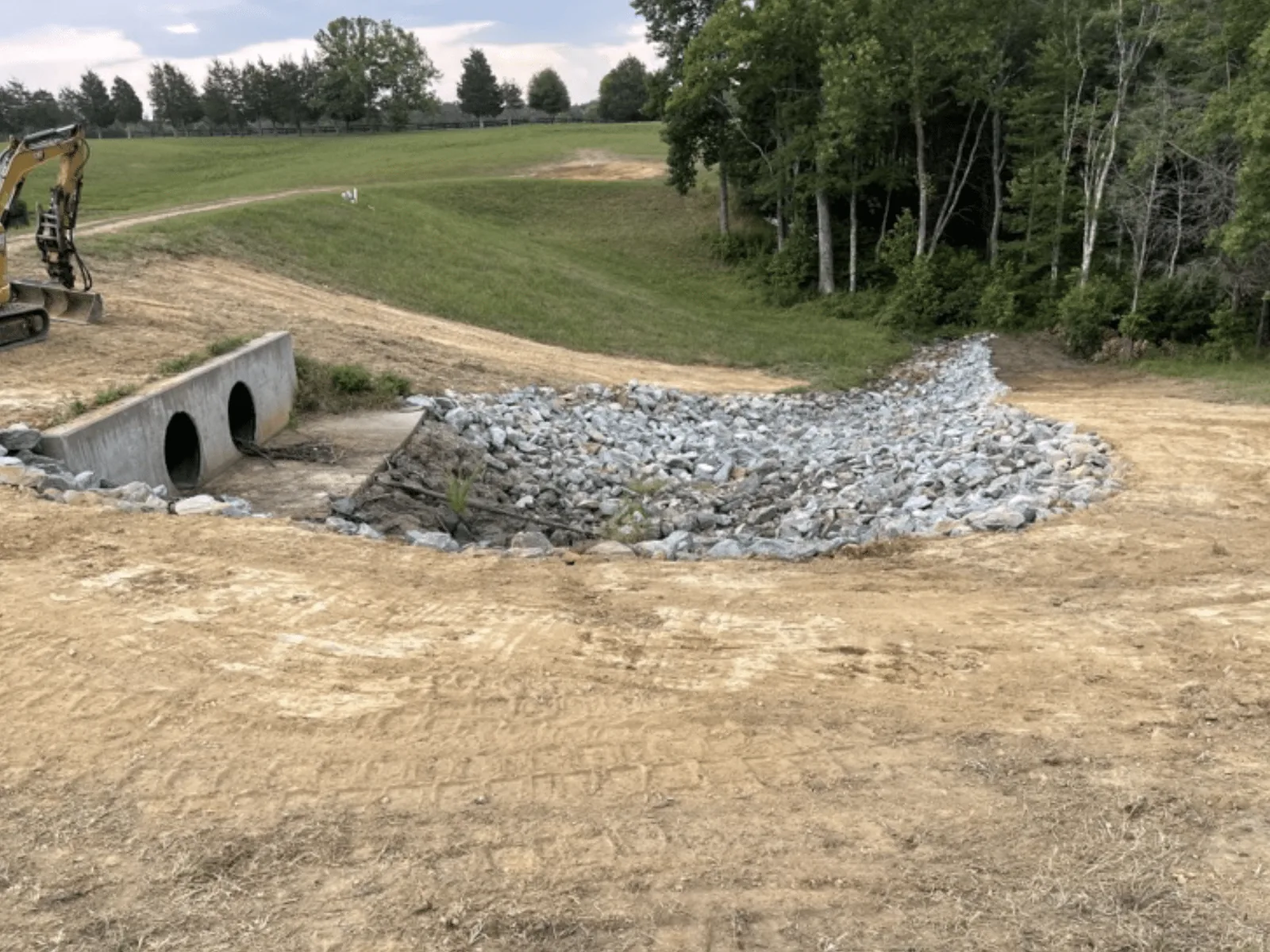
We set rock rip rap on washing banks, in ditches, at culvert outlets and on pond dams. We also shape the ground so runoff slows down and stops cutting.
Learn MoreWe clear the land, then build the pad and the gravel drive that come after it. One company carries the job to finished ground.
You pick the trees that stay, and the mulcher clears the brush and saplings around them. Shade trees stay up while the thicket under them goes.
On the Blackland Prairie, black clay takes in rain slowly once it is wet. We shape pads and drives so the rain runs off them.
We come out and look at the land before we price anything. The written quote spells out the work, and you decide with it in hand.
Tell us about the land, such as how thick the brush is and how hilly the ground gets. You can also call or text (469) 309-7002, and we will set a time to look at it.
Tell us about the land, what you want done and where it is. We look at the land and put the quote in writing.